




RV Storage in Pascagoula, MS: Options, Costs, and How to Protect Your Rig Year-Round
RV Storage in Pascagoula, MS
Introduction: Why Proper RV Storage Matters
RVs are built for adventure, not for sitting in a driveway through months of sun, salt air, and storm season. If you live in Pascagoula (or you’re moving here), good RV storage is less about convenience and more about protecting a major investment. A solid storage setup helps you avoid sun-faded paint, cracked seals, mildew smells, and battery issues that show up when a rig sits too long in the wrong conditions.
Pascagoula has a few specific storage challenges: coastal humidity, heavy summer heat, sudden downpours, and hurricane season. The upside is that local storage options are built with these conditions in mind—and you can usually find something that fits your RV size, budget, and access needs if you shop early.
Types of RV Storage Options
Uncovered Outdoor RV Storage
Pros
- Usually the most cost-effective option
- Easy pull-in and pull-out access
- Good for short-term storage or rigs with durable covers
Cons
- Full exposure to UV, rain, humidity, and wind-driven debris
- Requires a quality RV cover and more frequent inspections
In many markets, uncovered RV storage commonly falls around $75–$150/month for an average 25–35 ft RV (local pricing varies based on space size, demand, and whether the lot is paved, fenced, and well-lit).
Covered Outdoor RV Storage
Pros
- Better protection from sun and some weather
- Often the best “value” level of protection
- Less UV damage to roofs, decals, tires, and seals
Cons
- Fewer spaces available
- Height limits can be a dealbreaker for taller Class A rigs
- Typically costs more than uncovered parking
Covered storage often runs about $125–$200/month in many areas (pricing varies by facility quality and peak-season demand).
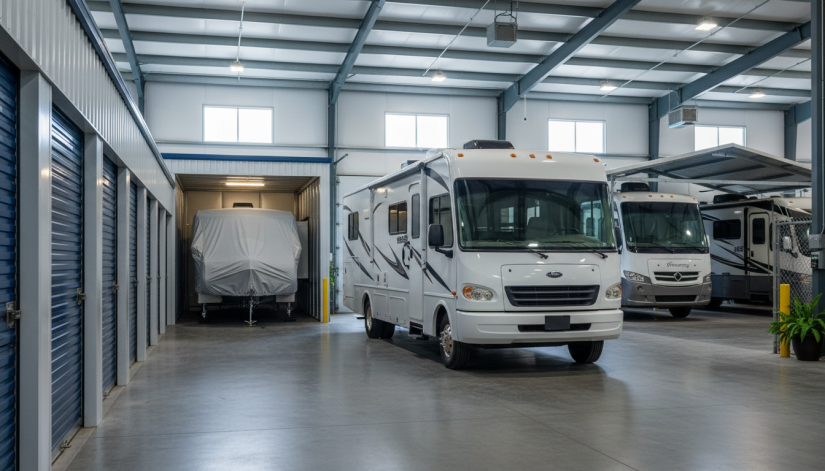
Indoor RV Storage
Pros
- Best all-around protection
- Fewer surprises after long stays
- Often stronger security
- Less weather-related wear
Cons
- Higher cost
- Limited supply
- Size restrictions (length, height, and turning radius matter)
Indoor RV storage is usually the most expensive, often around $150–$400+/month, depending on your RV size and facility features. Some owners use enclosed drive-in units (large-garage style) as an alternative when available.
RV Storage Recommendations Based on RV Type
Class A Motorhomes
Ideal storage: Indoor storage (best), or covered RV pads with strong turning space and height clearance
Why: Class A rigs have big roof surfaces, lots of seals, and higher replacement costs when sun and storms take their toll.
Class B Camper Vans
Ideal storage: Residential garage (if it fits), or secure outdoor/covered space
Why: Easier to maneuver and protect, and many owners prioritize quick access.
Class C Motorhomes
Ideal storage: Covered outdoor storage
Why: Often the best balance of protection and cost.
Travel Trailers and Fifth Wheels
Ideal storage: Leveled, paved pads or well-maintained gravel lots with good drainage
Why: Stable ground helps reduce frame stress and keeps tires from sitting in wet spots for weeks.
How to Choose the Right RV Storage Option
Start with four questions:
- What’s your budget?
- How concerned are you about weather exposure?
- How often do you need access?
- What are your RV’s dimensions (length, height, width)?
A covered spot can be perfect if you check your rig monthly. Indoor storage can be worth it if you store long-term or own a higher-end RV.
Checklist for Evaluating Facilities
- Measure first: know your length and height (include A/C units)
- Ask about surface: paved, gravel, or grass—and drainage after heavy rain
- Confirm access hours: standard vs. extended or 24/7
- Check turning space: tight corners and narrow lanes are stressful for big rigs
- Ask about rules: battery policies, cover guidelines, and hitch-lock requirements
Local owners often prioritize two things: easy highway access for weekend getaways and a space that doesn’t become a muddy mess after storms.
Preparing Your RV for Storage
A little prep now can save you a weekend of frustration later:
- Clean the exterior and roof: grime holds moisture and can stain over time
- Inspect seals and seams: check windows, roof edges, slide-outs—small cracks become big leaks fast
- Handle water systems: drain lines/tanks for longer storage; clean and dry systems still matter on the Coast
- Protect tires: inflate to spec, use tire covers, and consider pads/blocks to reduce heat and standing water exposure
- Battery care: disconnect or use a trickle charger if allowed
- Ventilation: use moisture absorbers; crack roof vents safely (with vent covers) to reduce musty odors
- Secure valuables: remove electronics, personal items, and important documents
RV Storage Security: What to Look For
Security is where the “cheap” option can become expensive. Look for:
- Controlled gate access (keypad or app entry)
- Camera coverage and bright lighting throughout the lanes
- Perimeter fencing in good condition
- Visible staff presence or regular patrols
- Layout that avoids blind corners and hidden rows
If you’re using peer-to-peer storage (parking on private property), add your own layers: hitch lock, wheel lock, steering lock, and a GPS tracker if you want extra peace of mind.
Local Storage Information: Pascagoula, MS
Most Popular RV Storage Types
In coastal areas like Pascagoula, many owners try for covered parking first—it reduces sun damage and interior heat without always costing as much as fully indoor storage.
Practical Budget Ranges
- Uncovered parking: often $50–$120/month
- Covered parking: often $90–$180/month
- Indoor/enclosed: often $150–$400+/month (varies by length/height)
Availability is usually tightest in spring and early summer when people prep for trips.
Weather Considerations
Plan for humidity, intense sun, and storm season. Covered or indoor storage helps protect roof seals and tire sidewalls. If you choose uncovered storage, a quality cover and monthly check-ins matter more on the Gulf Coast than in drier climates.
Pro Tips for Storing Your RV
- Do a quick monthly visit: check tire pressure, look for leaks, and run systems as your maintenance plan recommends
- Use a simple phone checklist: date, tire pressure, battery status, new seal cracks
- Keep a storage tote inside: gloves, paper towels, flashlight, small toolkit, moisture absorbers
- Ask local RV groups: owners know which facilities handle big rigs well and which flood after heavy rains
- Plan for busy season early: reserve covered/indoor storage before spring demand spikes
Conclusion: Making the Best Choice for Your RV
The best RV storage in Pascagoula comes down to matching protection level to your rig and your habits. If you travel often and want quick access, a secure covered or uncovered space may be perfect. If your RV sits for long stretches, indoor or enclosed storage can pay off by reducing weather wear and surprise repairs.
If you want to lock in a spot before the busy season, start comparing options now and ask about covered availability, access hours, and vehicle storage rules.
RV storage in Pascagoula, MS

