




RV Storage in Gautier MS: Options, Pricing Factors, and How to Store Your Rig Right
Introduction: Why Proper RV Storage Matters
RV ownership is fun until you’re staring at your driveway thinking, “Where is this thing going to live when we’re not using it?” That’s exactly why RV storage exists. A good storage spot protects your investment, keeps your neighborhood tidy, and makes it easier to hit the road without the stress of squeezing a large rig beside your house.
In Gautier, MS, storage decisions matter even more because of coastal weather. Humidity, heavy rain, salty air, and storm season can speed up wear if your RV is left exposed all year. The right storage option helps reduce issues like sun damage to seals, moldy interiors, tire cracking, and battery drain. It also gives you a safer place to park, especially if your RV sits for weeks at a time.
One note before we go further: you might see guides online that talk about RV storage in Gautier, MS. The planning mindset is similar—security, access, and protecting your rig—but Gautier’s Gulf Coast climate changes the details. Here, moisture control, storm prep, and rust prevention deserve extra attention.
Types of RV Storage Options
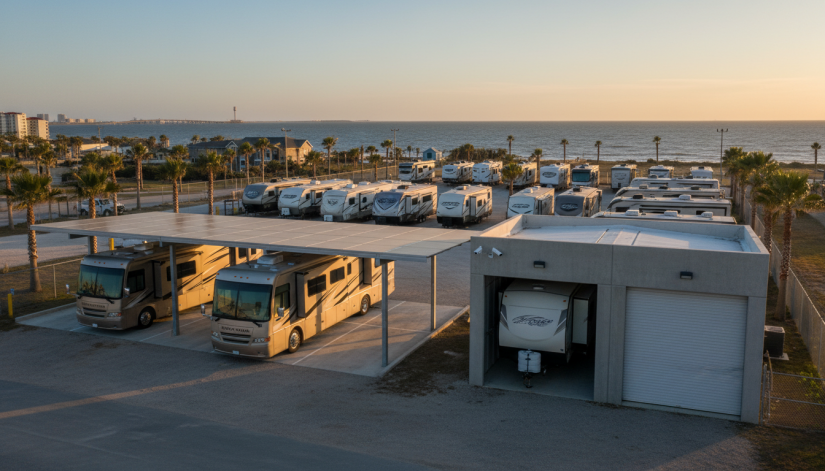
Most RV storage in Gautier falls into three categories: uncovered outdoor, covered outdoor, and indoor storage. Each option fits a different budget and risk tolerance.
Uncovered Outdoor RV Storage
Pros
- Usually the most cost-effective option
- Often the easiest to find
- Great for quick access and frequent weekend trips
Cons
- Full exposure to sun, rain, and humidity
- UV rays can fade paint and decals
- Rain + humidity can increase mildew risk if ventilation isn’t managed
Covered Outdoor RV Storage
Pros
- Roof/canopy provides partial protection from sun and rain
- Helps preserve seals, rubber trim, roof materials, and exterior finish
- A solid “middle ground” for many RV owners
Cons
- Covered spaces can fill quickly
- Clearance height and space width can be limiting for larger Class A rigs
Indoor RV Storage
Pros
- Best overall protection
- Less sun exposure and slower weather-related aging
- Often adds another layer of security
- Great for high-value RVs or long-term ownership
Cons
- Higher cost
- Fewer available spaces
- Door height/bay size can limit options for larger rigs
RV Storage Recommendations Based on RV Type
Not all RVs need the same setup. Here’s a practical match-up based on how different rigs are built and used.
Class A Motorhomes
Ideal storage: Indoor storage or covered RV pads
Why: More exterior surface area, more roof equipment, and higher replacement costs for seals and components. If you can’t do indoor, covered is a strong second choice.
Class B Camper Vans
Ideal storage: Residential garages (when they fit) or secure outdoor storage
Why: Class B vans are often easier to park and may fit in some garages or driveways. If storing outdoors, prioritize security and reducing sun exposure.
Class C Motorhomes
Ideal storage: Covered outdoor storage
Why: Covered storage is often the best price-to-protection compromise for Class C rigs.
Travel Trailers & Fifth Wheels
Ideal storage: Leveled and paved RV pads
Why: A stable, level surface protects the frame, tires, and hitch components. Paved or well-maintained gravel pads also reduce standing water and mud issues after heavy rain.
How to Choose the Right RV Storage Option
Start with your non-negotiables: budget, size, and how often you need access. Then work outward from there.
Key Factors to Consider
- Budget: Decide what you can comfortably spend monthly—and what protection level you’re buying with that cost.
- Security: Look for gates, cameras, lighting, and controlled access. Ask about gate hours and whether entry is tracked.
- Weather exposure: In Gautier, sun and humidity are daily factors, and storms are seasonal. Covered or indoor helps reduce long-term wear.
- RV size and clearance: Measure your rig’s height (including A/C units and antennas). Confirm lane width and turning space.
Checklist for Evaluating Storage Facilities
- Is the lot paved or well-maintained to avoid standing water?
- Are spaces clearly marked and wide enough to park comfortably?
- Is there adequate lighting for early departures or late returns?
- Do they offer covered or indoor upgrades if you want more protection later?
- Are fees and policies clearly explained with no surprises?
Local insight: Many Gulf Coast RV owners prioritize three things—storm readiness (gates + drainage), protection from sun/rain (covered when possible), and access that fits their schedule (weekend-friendly gate hours).
Preparing Your RV for Storage
Good storage starts before you park. A little prep now prevents bigger problems later.
- Clean and inspect: Wash the exterior, clean the roof (safely), and remove food inside to prevent pests.
- Check seals and roof: Look for cracks around vents, windows, and seams—small issues become big leaks fast in rainy climates.
- Battery care: Disconnect or use a maintainer if allowed. Batteries that sit can drain and shorten lifespan.
- Tire protection: Inflate to recommended PSI, use tire covers, and move the RV occasionally if possible to reduce flat-spotting.
- Ventilation: Use moisture absorbers, crack vents if safe, and consider dehumidifying options if your rig gets musty.
- Secure valuables: Remove electronics, important documents, and anything you wouldn’t want to replace.
RV Storage Security: What to Look For
Security should be layered—more than just a gate.
- Controlled entry: Keypad or coded access with limited entry points
- Video surveillance: Cameras covering entrances, lanes, and storage rows
- Lighting: Good lighting improves safety and discourages problems
- On-site staff/active management: Even part-time oversight can make a difference
Extra precautions: Hitch locks for trailers, wheel locks, steering wheel locks for drivable rigs, and always remove keys.
Local Storage Information: Gautier, MS
In Gautier, many owners choose outdoor storage because it’s common and convenient—then upgrade to covered or indoor when they’re storing a newer rig or want more protection. Availability can change seasonally, especially when more people travel or move.
Weather considerations are straightforward:
- Expect humidity and rain year-round
- Prepare for storm season
- Choose facilities with good drainage and avoid low-lying lots where water collects
- Use moisture control inside the RV to prevent mildew
If your RV has exposed metal underneath, occasional checks for rust and corrosion are a smart coastal habit.
Pro Tips for Storing Your RV
- Do quick off-season check-ins: A short monthly visit to inspect seals, look for pests, and run systems can prevent bigger issues.
- Create an internal storage bin system: Keep hoses, leveling blocks, and adapters in labeled bins so trips are faster.
- Use a departure checklist: Tire pressure, battery status, hitch connections, lights, and a quick walk-around should be routine.
- Connect with local RV communities: Groups often share tips on maintenance shops, storage, and Gulf Coast-specific upkeep.
Conclusion: Making the Best Choice for Your RV
The best RV storage choice in Gautier comes down to protection, security, and how you actually use your RV. If you’re storing a high-value motorhome—or want maximum weather protection—indoor or covered storage is usually the best long-term move. If you’re budget-focused or travel frequently, a secure, well-maintained outdoor space can still work great—just be serious about moisture control, tire care, and regular inspections.
If you’re planning to store your rig during peak travel months, don’t wait until the last minute. Covered and indoor spots can fill up quickly. Lock in a space early so you’re not scrambling right before your next trip.
RV storage in Gautier, MS
